Free 3D Model Generator:
Create 3D from Text & Images
100% free browser-based 3D asset generator. Turn text prompts, concept sketches, and 2D photos into production-ready, watertight 3D models in seconds. Export to GLB, OBJ, and STL with zero watermarks and zero fees.
Explore What You Can Create with One Pic 3D
An end-to-end 3D generative toolchain engineered to accelerate 3D artists, game creators, and makers.
Generate Production-Ready 3D from Text
Describe what you envision in natural language. Our generative geometry engine synthesizes watertight meshes, optimal UV maps, and PBR textures in 20-30 seconds.
Transform Any Concept Art or Photo into 3D
Feed a single 2D image, character sketch, game sprite, or product photo. Instantly derive volumetric relief, watertight back-plinth, and export-ready manifolds.
Repaint & Resurface 3D Assets with AI
Apply photorealistic or hand-painted materials to untextured or existing 3D models. Automatically generates Albedo, Roughness, Metallic, and Normal maps.
Instant Auto-Rigging & Skeletal Animation
Automatically fit human and creature skeletons with bone weighting. Access a library of combat, walk, jump, and idle animation clips ready for Unity & Unreal Engine.
From 2D Concept Art to Tangible 3D Mesh
Drag the interactive divider to inspect how flat 2D concept sketches and illustrations seamlessly transform into production-ready 3D polygonal geometry with watertight manifolds and PBR shading.
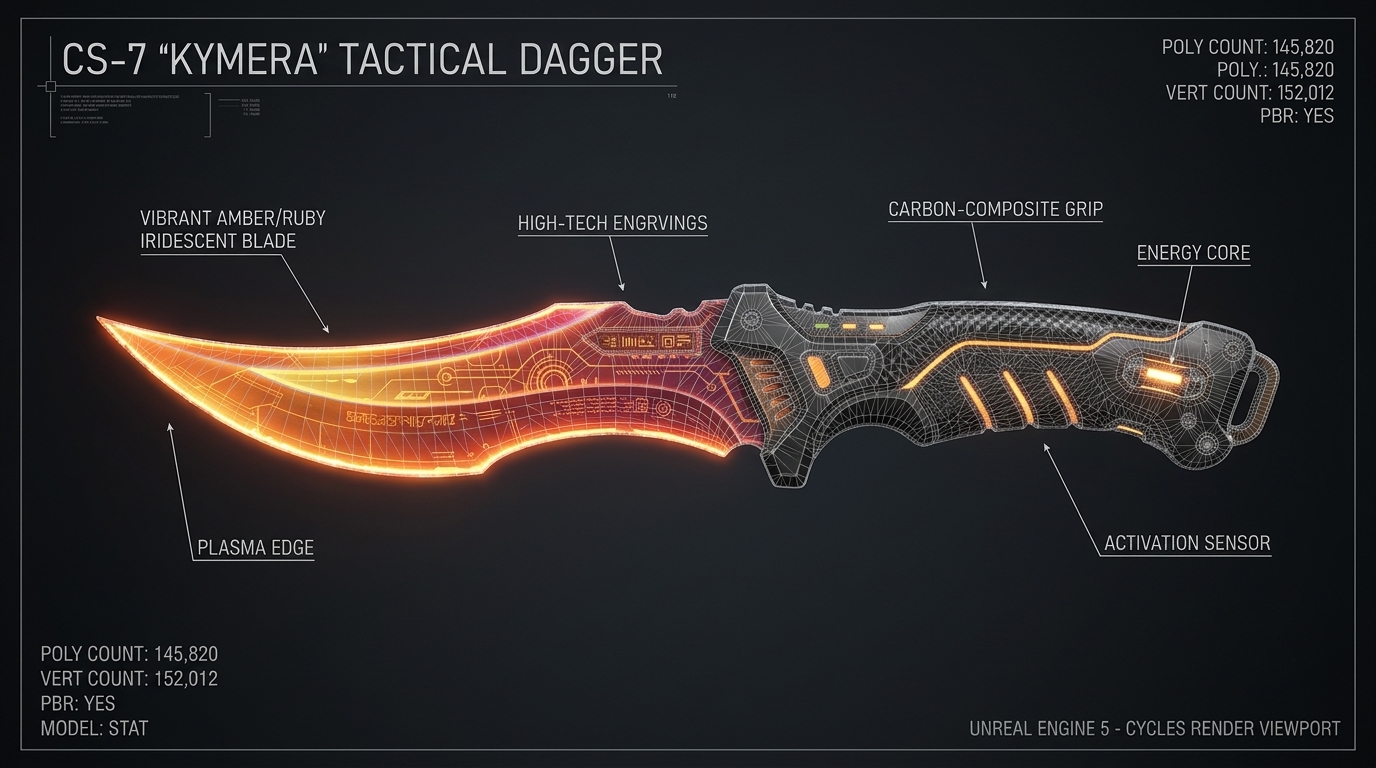
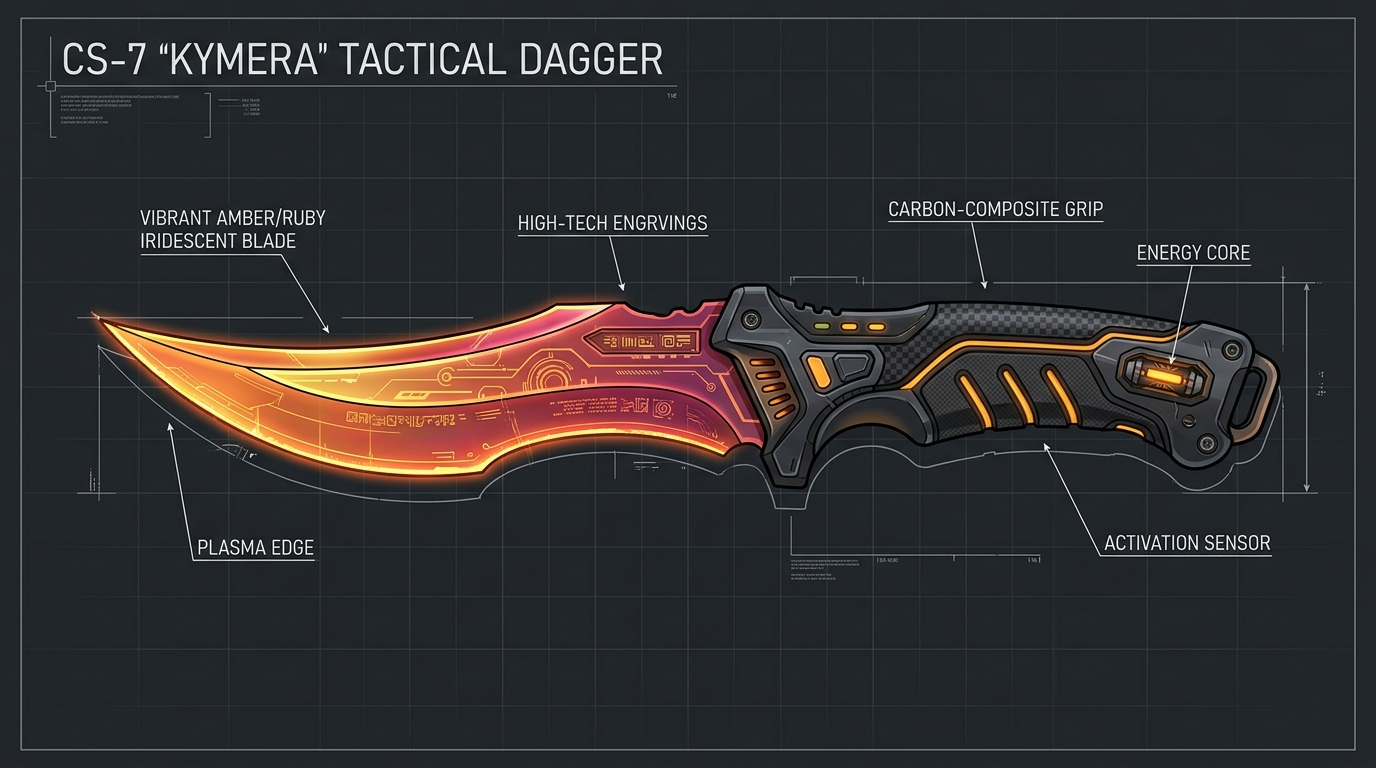
3D Studio 100% FREE
Convert any image into a production-ready, watertight 3D asset in real time. 100% Free with zero subscription, zero credits, and unlimited exports.
Drop your image here or browse files
Supports PNG, JPG, WEBP, SVG · Processed locally with WebGL · 0 server latency
Engineered for High-Velocity 3D Pipelines
Geometry synthesis crafted to move directly from image inputs into Blender, Unreal Engine, or 3D printer slicers.
Single-Image to 3D Relief
Transform any 2D illustration, logo, or game art into a dense 80×80 voxel elevation mesh in milliseconds with zero server latency.
Watertight Slicing Geometry
Automatically adds plinth skirts and closed base volumes so exported STL models drop straight into Bambu Studio, Cura, or PrusaSlicer without repair.
Multi-Format Export Engine
One-click export to GLB for Web 3D/AR, OBJ for DCC modellers (Blender/Maya/ZBrush), and binary STL for additive manufacturing.
100% Client-Side Privacy
All WebGL rasterization and mesh generation execute securely on your device GPU. Zero images or prompts are transmitted to external servers.
PBR Shader & Clay Inspection
Inspect mesh curvature, surface tension, and vertex normal distributions with real-time textured, studio clay, and wireframe viewing modes.
Developer API & Automation
Seamlessly script and embed 3D generation into your build pipelines, e-commerce storefronts, and automated game engine modding toolchains.
Curated Production Demos
Live, code-generated models running in WebGL — orbit each asset, examine polygon topology, and study its procedural factory.
- characterv1.5.1WIP14.2k
Dual-Sword Warrior — Procedural Surfaces
- characterv1.5.0WIP8.6k
Low-Poly Humanoid — Rigged
- weaponv1.4.4★ FEATURED18.5k
Talon Knife | Doppler Ruby (FN)
- weaponV224.1k
AWP | Medusa (MW) · V2 rebuild
- characterv1.5-betaWIP11.8k
Pikachu 10K Star Celebration
- weaponv1.4.115.4k
Glock-18 | Ghost Protocol (WW)
- weaponv1.39.8k
Classic Knife | Fade (MW)
- vehiclev1.332.0k
BMX Endurance Bike
- weaponv1.312.4k
M9 Bayonet | Doppler Phase 2
- propv1.27.2k
Sony WF-1000XM3 + Case
- weaponv1.221.6k
ISSACA 12 Gauge Shotgun
- weaponv1.26.9k
Gerber Paracord Knife
- architecturev1.219.3k
Doraemon House (isometric)
- vehiclev1.245.8k
War-Hauler "SECTOR 07"
- propv1.2WIP16.1k
Crowned Loot Chest
8-Stage Sculpting Pipeline
A multi-pass sculpting pipeline vision-reviews geometry step by step, self-correcting until every silhouette feature satisfies high-fidelity thresholds.
- 01
blockout
Mass, proportion, silhouette — the read must survive before any detail exists.
- 02
structural
Named parts, pivots, sockets: a runtime hierarchy the code can address.
- 03
form
Bevels, rounds, panel seams — geometry that matches the reference, not approximates it.
- 04
material
Finish class and gradient stops derived from reference pixels, not memory.
- 05
surface
Micro-detail: wear, stains, engraved linework, gloss-vs-matte zones.
- 06
lighting
Controlled camera views, tone-mapping checks, per-region comparison gates.
- 07
interaction
userData.tick idle loops, articulation-ready joints, colliders.
- 08
optimization
Triangle and draw-call budgets enforced without losing identity.
Engineered for Every 3D Workflow
Whether you're crafting indie game assets, preparing custom 3D prints, or designing AR product experiences, One Pic 3D delivers immediate geometry.
Game Studios & Modders
Rapidly turn weapon skins, environment props, and UI glyphs into game-engine ready GLB and OBJ assets for Unity, Unreal Engine 5, and Godot 4.
- Direct GLB / OBJ import
- Clean vertex colors & UVs
- Optimized draw-call budgets
- Unreal Engine & Unity ready
Makers & 3D Printing
Produce manifold, watertight bas-relief medallions, keychains, and figurines. No manual boolean stitching, wall thickness fixing, or manifold repair required.
- Binary STL 1-click download
- Solid skirt base plinth
- Bambu Studio & Cura tested
- FDM & SLA resin compatible
Product Teams & E-Commerce
Preview packaged products, badges, and embossed merchandise in real-time interactive 3D WebGL viewers on any website or AR mobile quick-look.
- Instant WebGL 360° orbit
- Mobile touch responsive
- Zero cloud hosting cost
- Sub-second model load
Concept Artists & Designers
Validate 2D concept silhouettes against 3D lighting, depth, and specular angles before committing to manual high-poly sculpt passes in ZBrush.
- Dynamic extrusion depth slider
- Wireframe topology view
- Studio clay shading inspection
- Preserves silhouette integrity
Smart Logistics & Digital Twins (Viral 🔥)
Inspired by viral Three.js showcases (1.7M+ hit). Turn 2D warehouse layouts, factory floorplans, and logistics schematics into gamified, production-ready 3D isometric digital twins.
- Isometric warehouse racks & pallets
- Strategy-game style operational view
- Three.js & WebGPU client-side simulation
- Zero cloud leak & instant local exports
Compare 3D Generation Methods
See why creators choose instant, local WebGL reconstruction over server queues and complex scanning rigs.
| Capability / Metric | One Pic 3D (Ours) | Cloud AI 3D Services | Manual 3D Sculpting |
|---|---|---|---|
| Generation Time | Instant (0.1s – 2s) | 2 – 10 minutes (server queue) | 4 – 16 hours manual work |
| Data Privacy | 100% Client-Side GPU | Images uploaded & stored remotely | Local (manual) |
| 3D Printing Readiness | Watertight Base Plinth STL | Often open non-manifold edges | Requires manual mesh cleanup |
| Cost & Limits | 100% Free & Unlimited | $20–$60 / mo credit subscriptions | Software licenses ($300+/yr) |
| Export Formats | GLB, OBJ, binary STL | Usually GLB / USDZ only | All formats supported |
| Browser-Only Workflow | Zero install, pure WebGL | Web portal (cloud compute) | Heavy desktop workstation |
Automate 3D Asset Creation via API
Integrate automated 3D mesh reconstruction directly into your web applications, game engines, or e-commerce pipelines.
curl -X POST "https://api.imgto3d.internal/v2/generate" \
  -H "Authorization: Bearer YOUR_API_KEY" \
  -F "image=@concept_weapon.png" \
  -F "resolution=80" \
  -F "watertight=true" \
  -F "export_formats=glb,stl"
import onepic3d
client = onepic3d.Client(api_key="YOUR_API_KEY")
model = client.generate_from_image(
image_path="./concept_weapon.png",
export_formats=["glb", "stl"],
watertight=True,
voxel_depth=5
)
model.save_stl("./output/weapon_print.stl")
print(f"Generated watertight mesh with {model.polycount} tris in {model.elapsed_ms}ms")import { OnePic3D } from '@onepic3d/sdk';
const client = new OnePic3D({ apiKey: process.env.ONEPIC3D_API_KEY });
const result = await client.models.create({
image: './concept_weapon.png',
watertight: true,
formats: ['glb', 'obj', 'stl'],
});
console.log(`Model ready: ${result.downloadUrls.stl}`);Developer & Agent Quick Start
Runs under Claude Code, Codex, or OpenCode. Python 3.10+ stdlib only — nothing external to install.
1 Install the skill
git clone https://github.com/img2threejs/img2threejs.git \
  ~/.claude/skills/img2threejs
2 Invoke with one image
/img2threejs Rebuild this object as a Three.js model,
keep the proportions, angles, and colours.
3 Follow the passes
The skill classifies the subject, runs the detail inventory, and gates every pass on its own — a side-by-side comparison at each step until the render matches.
Frequently Asked Questions
Everything you need to know about our reconstruction engine, exported formats, and 3D printing workflows.
Is One Pic 3D really 100% free forever with no hidden fees?
Yes, completely 100% free forever. There are zero subscriptions, no credit coins, no waitlist, no watermarks, and no sign-up required. Because our entire image-to-3D voxelization and Three.js geometry mesh pipelines execute 100% locally on your computer GPU via WebGL, we have zero expensive cloud inference bills and pass this total freedom directly to 3D creators worldwide.
Is this photogrammetry or mesh extraction?
No. It is reconstruction-by-code: a staged pipeline writes a TypeScript THREE.Group factory from primitives, procedural shaders, and generated geometry. One reference image is enough; nothing is downloaded or scanned.
Can it do characters, not just objects?
Yes. Characters route through an anatomy-aware track — head-unit proportions, facial landmarks, pose — with an opt-in projection-first path when maximum likeness for a specific person matters. The pipeline reports per-region confidence instead of inventing hidden detail.
What 3D formats can I export?
The studio provides 1-click downloads for GLB (optimized for WebGL, Three.js, and AR mobile quick-look), OBJ (universal polygonal mesh for Blender, Maya, 3ds Max, and ZBrush), and binary STL (watertight geometry ready for slicing in Cura, Bambu Studio, and PrusaSlicer).
Are the exported STL models 3D-printable?
Yes. The engine automatically builds a solid ground plinth and continuous skirt around the elevation voxels, guaranteeing an enclosed, watertight manifold mesh. You can slice and 3D print the STL directly with FDM or SLA resin printers.
What do I need to run it?
An agent host (Claude Code, Codex, or OpenCode) and Python 3.10+ — the forge scripts are stdlib-only. The rendered output needs any browser that runs Three.js and WebGL 2.0.
What license covers the generated models?
Apache License 2.0 — skill, showcase, and generated factory code alike. You are free to use the code and models in personal or commercial projects without royalty fees.